
-
Event Details
Event Details
Arab National Bank and Arab Bank Europe,discover more
ABA Sponsors for 2026

Iran digs in for a long struggle
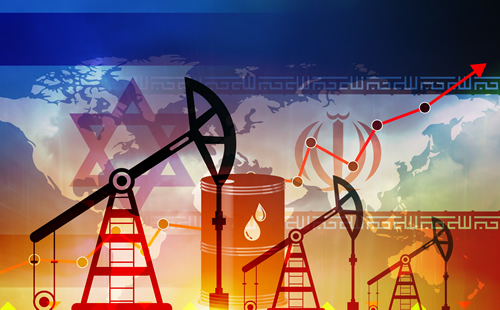
https://arabdigest.org/As President Trump’s war on Iran continues and its unintended consequences proliferate, Hugh Miles, publisher of Arab Digest, considers its impact on the Gulf states.
This is a war that is illegal, immoral and brutal, a crime of aggression and a naked violation of the United Nations Charter, launched without international sanction or the justification of self-defence. It is built on the cynical manipulation of public opinion, on nuclear smoke screens and recycled propaganda borrowed from previous conflicts in Iraq and Libya.
But for all its firepower, this war represents something far more damning than a military and moral failure. It is a self-inflicted wound for the United States. Washington and Tel Aviv have catastrophically mistaken “inflicting punishment” for “strategic victory.”
Nowhere is this miscalculation more painfully evident than in the Gulf states. These absolute monarchies long wrapped in an American security blanket now find themselves exposed, hostages to a war they never wanted, being fought using bases on their soil, wreaking havoc on their cities.
The United Arab Emirates has borne the heaviest punishment. More than 1,800 missiles and drones have targeted this tiny state, a near ceaseless rain of fire – much of it hitting Dubai – that American-supplied defences cannot fully stop. Officials frame the 93% interception rate as a “successful outcome” but the psychological shock of sustained attack has shattered something far more delicate: Dubai's carefully constructed aura of stability.
The psychological shock has been profound. The myth of Dubai as a “safe haven,” robustly cultivated by Western influencers paid in petrodollars, has been shattered. The economic model that built modern Dubai - low taxes, stability, openness - is under existential threat.
If the war ends soon, the UAE has still options: the “Covid playbook” of stimulus packages, perhaps even the long-discussed “casino option” to lure back tourism. But if the fighting continues, the consequences are profound. A prolonged war threatens the fundamental social pact of the Gulf monarchies: very limited political rights in exchange for extreme prosperity and safety. If oil revenue and investment dry up, the contract between rulers and the ruled will crack.
On March 9, US Senator Lindsey Graham issued a threat: Saudi Arabia and the GCC countries must join the fight against Iran. “If not, consequences will follow.”
The response from the Gulf was instructive and unprecedented. Khalaf al-Habtoor, a billionaire close to the UAE's ruling circles, delivered a stinging rebuke - later deleted but widely understood to reflect regime sentiment. “If President Donald Trump and Senator Graham are prepared to risk their country and the lives of Americans for Israel’s interests, that is their choice,” Habtoor wrote. “As for us, we will not do the same.” Saudi influencers joined the chorus, openly cursing Graham on social media.
This exchange exposes the deep fracture separating the Gulf states from their supposed allies. They no longer trust any party to this war. They cannot rely on the US for security, seeing Washington prioritise Israeli goals over Arab stability. They fear America will declare victory and leave behind a mess. They fear Israel dragging them into the conflict. They fear Iran. But most of all the ruling families fear prolonged war will expose their own fragile foundations.
Gulf rulers face an impossible choice. Join the American war and become legitimate targets for Iran's retaliation. Refuse and risk the wrath of their protector. This is the trap of client status, the inevitable cost of allowing America to be the GCC's security guarantor.
The United States has no strategy. Its war plans have changed multiple times. It is running out of interceptor missiles. Meanwhile, Iran executes a strategic plan decades long in preparation without deviation. It has effectively shut down the Strait of Hormuz, crashing global energy markets and sending US petrol prices climbing toward $4.00 per gallon, directly threatening Trump’s political base.
The colonial strategy of “divide and conquer” has been reversed. Iran now fractures its enemies. A growing gap separates Washington and Tel Aviv based on incompatible war aims. Israel, driven by its quest for “Greater Israel” and a racist supremacist ideology wants destruction regardless of global economic fallout. The United States, bound by material interests, must calculate the cost of what could become a global economic apocalypse.
Trump, characteristically, is in denial, attempting to manage a military catastrophe with the playbook of a New York con man, changing his story every few hours, hoping to talk his way out of reality.
Washington and Tel Aviv now face a prolonged conflict they did not prepare for, cannot sustain and cannot win. By destroying US early detection systems and radars in the first ten days, Iran has pushed the American military into a corner it had failed to anticipate. The American plan to escalate will backfire as Iran can damage the Gulf states more than the United States can defend them.
Iran is prepared to endure significant punishment.Though for most Iranians survival and an end to the war will suffice, the regime’s goals are grander: the complete defeat of American imperialism in West Asia, the humiliation of the Trump administration and the final decolonisation of the region.
As Mohsen Rezaee a former Revolutionary Guard commander observed: “Look, the big mistake they made was that they came and designed a short-term war, but they didn’t realise this might turn into a long-term one.”
We are grateful to Arab Digest for permission to republish this article, which originally appeared as one of their regular newsletters.
More In
News

Iran War Has Permanently Repriced Region - No Deal Will Undo It

GCC investors remain committed to UK property, despite regional uncertainty.

ABA members analyse the auumn budget
PWC's forecast of what to look for in the budget.
Briefing from ABA member, Themis.

24 April 1955 – 17 August 2026.